
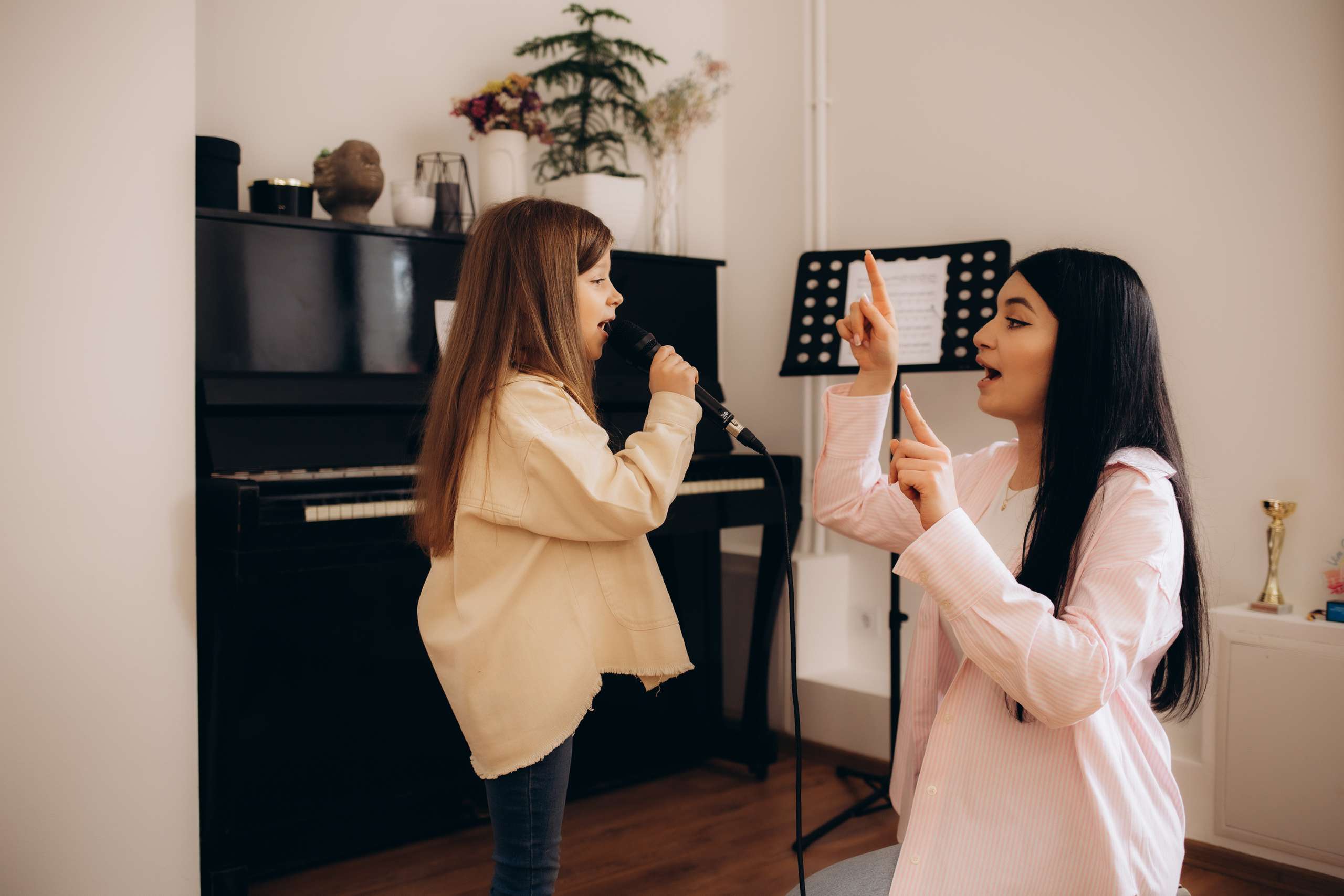
Some singers, especially the very young ones, have the misguided idea that singing is a matter of being blessed with either a good or a big voice. In most cases the public attributes any sign of an artist’s excellence to his or her good fortune in the matter of birth. What the public is perceiving is not good fortune, however, but good technique. Technique changes the quality of the voice. It alters the posture and breathing and makes the proper use of resonance. Without it, no matter how lovely the original voice may have been, the voice gets tired and squeezed or becomes small and forced. It is not the individuality of the artist that the technique destroys but the individuality of the artist that the technique preserves and frees to perform as it can in all situations.
One of the most underrated singing techniques is breathing. Singing does not end with your vocal cords, but with the rest of your body. Shallow and strained breathing causes vocal insecurity and awkward, forced phrasing. Air control makes your singing feel and sound more comfortable, giving the impression of confidence. It also helps you preserve your vocal cords, allowing you to practice longer and perform more difficult pieces. With controlled breathing, singing eventually becomes more of a comfortable practice than a strain.
A second key component is intonation (how in-tune the singing is), which is as much a function of listening as it is of singing. Much intonation problems arise from the ear not being developed to discriminate between subtly different pitches. Specific exercises refine the relationship between the ear and voice, so that corrections occur almost without thinking. With the refinement of this relationship, singers develop the capacity to sing intricate melodies, fluctuate between soft and loud singing, and maintain clear enunciation even in difficult-to-articulate passages. This is not about achieving some kind of robotically perfect singing. It is about achieving expressive range through control.
Just as significant is the extension of your upper and lower range. A singer must be carefully conditioned to extend their range, rather than trying to push and force their way to the desired note. Forced attempts to hit a note lead to tension, which reduces flexibility. A singer who works carefully, in a gradual manner, allows their voice to adjust and find access to new registers, without sacrificing the quality of the sound. They will eventually find that notes they once thought were beyond their range, are now available to them, providing new musical options and possibilities.
Finally, technique is a means to the end of being able to express the self. When technical difficulties are not a problem, you can concentrate on musical expression. The singer can worry about interpreting a song rather than having to worry about getting the notes out. It is for this reason that many accomplished singers still talk about the importance of technique. Learning to sing is not a quick revelation, it is a slow and continued process of learning to sing well while keeping your voice healthy and letting it still sound like you.